

Nighttime Skincare Routine: What to Do Before Bed (and What to Skip)
Your evening routine has a different job from your morning one: remove the day, treat, protect overnight, and signal that the day is over. The steps in order, what to skip on rest nights, and why consistency beats a long product list.
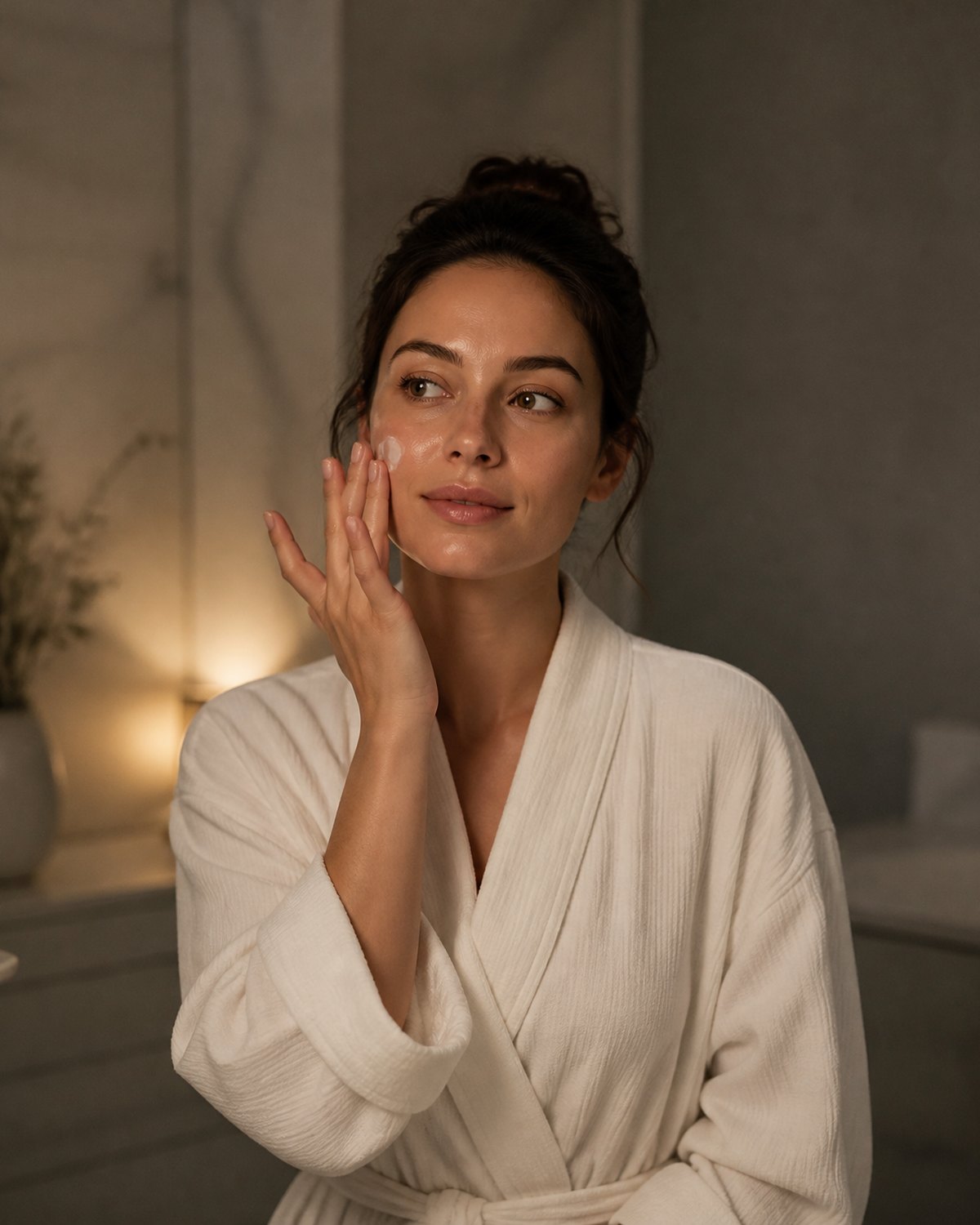
A good nighttime skincare routine does four things in order: removes the day, treats, moisturizes, and helps you wind down. In practice that means removing makeup and sunscreen, cleansing gently, applying one treatment, then moisturizer. On two or three evenings a week, you can add a short warm and cold phase before the treatment. Everything else is optional, and fewer products used every night usually beats a long list used occasionally.
Why does your skin need a different routine at night?
Your morning routine is about protection: sunscreen, and getting out the door. Your evening routine has a different job. It removes what the day left on your skin, gives your treatment product time to work without sun exposure, and supports the skin while you sleep.
Skin also behaves differently across the day. In a study published in the Journal of Investigative Dermatology, researchers measured skin barrier markers every two hours over 24 hours and found clear daily rhythms; their results suggest skin permeability is higher in the evening and at night than in the morning. Researchers linked this to how topical products are absorbed, which is one reason evening is the traditional slot for treatment products.
Sleep itself matters too. In a study of 60 women, chronic poor sleepers showed higher water loss through the skin and slower barrier recovery than good sleepers, who recovered about 30% more after 72 hours. It is an association, not proof that one causes the other, but it is a good reason to treat your evening routine and your sleep as one ritual.
What is the right order for a nighttime skincare routine?
The American Academy of Dermatology describes a simple principle: cleanse, apply any treatment right after cleansing, then moisturize. The evening version adds a first step for removing makeup and sunscreen, and an optional warm and cold phase on some nights.
Step 1: Remove makeup and sunscreen (1 minute)
Start by dissolving makeup and sunscreen, especially water-resistant formulas, with a micellar water, a cleansing balm or an oil cleanser. Be gentle around the eyes.
Step 2: Cleanse gently (1 minute)
Use a gentle, non-comedogenic cleanser with warm, not hot, water. The AAD advises against scrubbing: hot water and rubbing can irritate the skin and make pores more noticeable. Pat dry.
Step 3: Warm, then cool (optional, 5 to 10 minutes, two or three evenings a week)
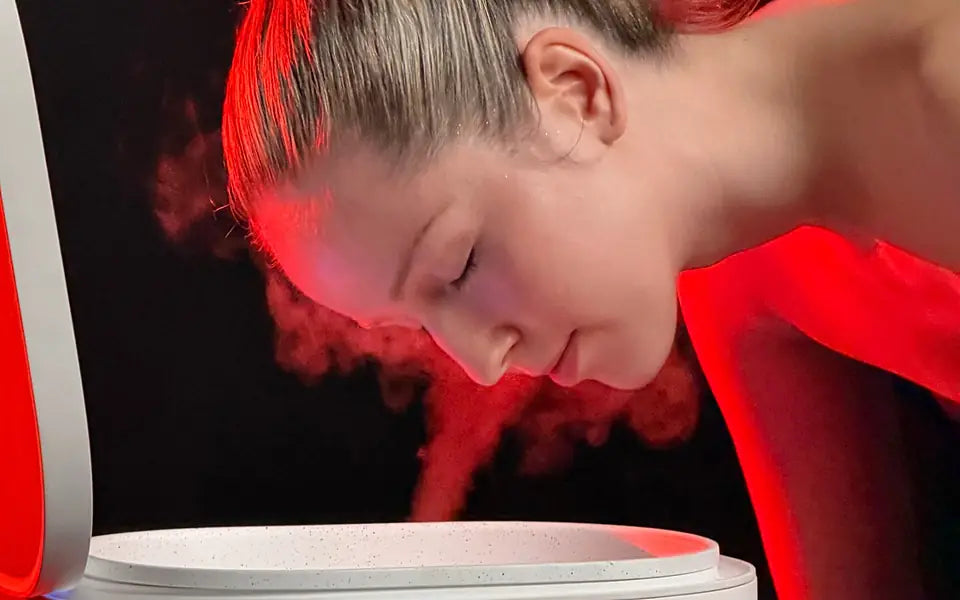
This is the step that turns a routine into a ritual. A few minutes of warm mist softens the skin's surface and makes the evening feel like an actual pause. A short cold phase afterwards can leave the skin looking fresher and tighter for a while. We explain why the order matters in ice or steam for your face.
Skip this step on nights when your skin feels sensitive or right after a stronger treatment.
Step 4: Apply one treatment (1 minute)
Evening is the classic slot for active ingredients. Choose one per night rather than layering several:
- Retinol, if your goal is smoother-looking texture or less visible pores. The AAD suggests applying it at bedtime and waiting about 30 minutes after washing to reduce irritation. Avoid retinol if you are pregnant or breastfeeding.
- Salicylic acid, if your skin tends to clog. On nights you use it, skip retinol.
- A hydrating serum, on rest nights or if your skin feels tight.
The AAD also notes that using too many products can irritate the skin. One well-chosen treatment, used consistently, does more than four used randomly.
Step 5: Moisturize (1 minute)
Finish with a moisturizer suited to your skin type. A slightly richer texture at night is fine for normal to dry skin; oily skin can stay with a light, non-comedogenic formula. This is the step that helps your skin feel comfortable until morning, especially after a treatment.
Step 6: Wind down (5 minutes)
The last step is not a product. Dim the lights, put the phone away, and give yourself a few minutes before bed. A familiar scent can become a simple cue that the day is over. Many people pair their evening skincare with the same scent every night for exactly that reason.

What should you skip at night?
- Scrubs and strong exfoliation every night. Once or twice a week at most, and never on the same night as retinol.
- Doubling up on actives. Layering retinol and salicylic acid on the same evening raises the risk of irritation. Alternate them instead.
- Going to bed in makeup. Even a quick removal and cleanse is better than nothing.
- Sunscreen. It belongs in the morning routine, not the evening one.
How long should a nighttime skincare routine take?
Five minutes on most nights: remove, cleanse, treat, moisturize. Fifteen on the two or three evenings when you add the warm and cold phase. The point is not length but regularity. A short routine you actually do every night will always outperform an elaborate one you abandon after a week. Where each product fits, morning and evening, is covered in skincare routine order: what goes first.
If you want the longer, weekend version, see the complete 7-step at home facial.
Where Frosteam Harmony fits in your evening
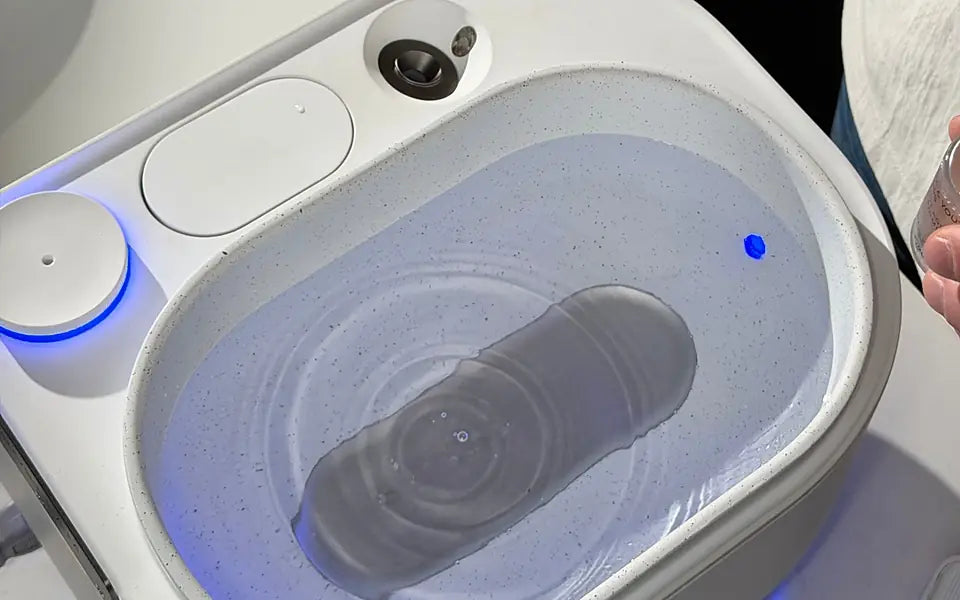
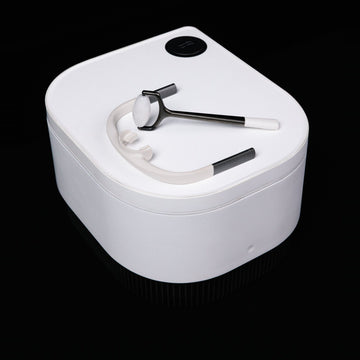
We designed Frosteam Harmony for step three and step six. Nano-ionic steam for the warm phase, a facial cold plunge held between 1 and 4°C for the cool finish, and a built-in waterless aroma diffuser that adds scent without the oils ever touching the water. One device on your counter, so the ritual takes minutes instead of setup. Get Yours Now.
Not sure which evening ritual suits your skin? Take our free AI Skin Analysis.
Sources
- American Academy of Dermatology Association. Should I apply my skin care products in a certain order?
- American Academy of Dermatology Association. What can treat large facial pores?
- Yosipovitch G, Xiong GL, Haus E, Sackett-Lundeen L, Ashkenazi I, Maibach HI. Time-dependent variations of the skin barrier function in humans. J Invest Dermatol. 1998;110(1):20-23.
- Oyetakin-White P, Suggs A, Koo B, et al. Does poor sleep quality affect skin ageing? Clin Exp Dermatol. 2015;40(1):17-22.
Watch the ritual
The contrast therapy facial ritual, step by step
The complete ritual in under a minute: nano-ionic steam, a facial cold plunge and aromatherapy, step by step.




Leave a comment
This site is protected by hCaptcha and the hCaptcha Privacy Policy and Terms of Service apply.