

Article: How to Unclog Pores (Without Making Them Look Bigger)
How to Unclog Pores (Without Making Them Look Bigger)
Clogged pores are oil and dead skin cells that stay put. The routine dermatologists recommend to clear them, in order, how long it takes to see a difference, and the habits that quietly make pores look bigger.

To unclog pores, you need a gentle routine more than a strong one: cleanse twice a day without scrubbing, add a salicylic acid cleanser in the evening, use a retinoid at night, choose non-comedogenic products and wear sunscreen every morning. Give it six to eight weeks. Squeezing, harsh scrubs and hot water tend to make pores look bigger, not clearer. If clogged pores come with painful or persistent breakouts, see a dermatologist.
What are clogged pores, and what causes them?
Each pore is the opening of a hair follicle with a small oil gland attached. A pore becomes clogged when excess oil and dead skin cells build up inside it instead of moving out to the surface. If the pore stays open, the clog darkens at the surface and becomes a blackhead. If it closes over, it becomes a whitehead.
According to the American Academy of Dermatology, several things make pores clog or look larger:
- Oily skin. More oil means more material to build up.
- Clogged pores themselves. A clogged pore expands, which makes it more visible.
- Irritation. Scrubbing and hot water can inflame the skin and make pores more noticeable.
- Loss of firmness. Sun damage and age reduce firmness around the pore, which enlarges its appearance.
- Picking and squeezing. These irritate the skin and can make pores look more prominent.
Are they clogged pores or sebaceous filaments?
Check before you start treating. Small, flat, evenly spaced grey or beige dots across the nose are usually sebaceous filaments, a normal part of the pore that does not need clearing. Fewer, darker, larger dots are more likely clogged pores. We explain the difference in detail in sebaceous filaments vs blackheads.
How do you unclog pores? The routine, step by step
1. Cleanse twice a day, gently
Morning and evening, with warm, not hot, water and a gentle, non-comedogenic cleanser. Wash with your fingertips and do not scrub. The goal is to remove excess oil without irritating the skin, because irritation makes pores look larger.
2. Add salicylic acid in the evening
The AAD notes that a cleanser containing salicylic acid may help unclog pores. If it dries or irritates your skin, alternate it with your mild cleanser and keep the salicylic acid for the evening.
3. Use a retinoid at night
For clogged pores and blackheads, dermatologists recommend a retinoid. Adapalene is available without a prescription; retinol is a gentler option found in many skincare products. Apply it at bedtime, and wait about 30 minutes after washing to reduce irritation. Avoid retinoids if you are pregnant or breastfeeding. Do not use retinoid and salicylic acid on the same night if your skin is sensitive.

4. Switch to non-comedogenic products
Moisturizer, sunscreen and makeup can all contribute to clogged pores. Look for labels such as “non-comedogenic”, “oil free” or “won't clog pores”.
5. Exfoliate carefully, not often
Gentle exfoliation once or twice a week can help, as long as it does not irritate. Never on the same night as your retinoid, and never with a harsh scrub. A dermatologist can advise you on the safest option for your skin, or exfoliate for you in the office.
6. Use steam as preparation, then cool down
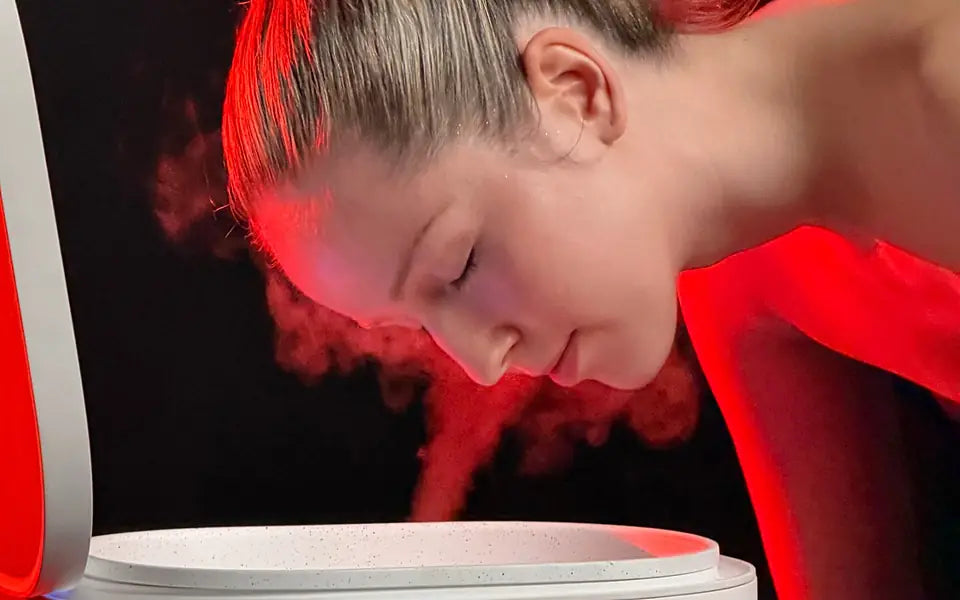
A few minutes of warm mist softens the skin's surface and makes the routine more pleasant, which is why it often comes before a mask. It does not clear pores on its own, and it is not an invitation to squeeze. Following it with a short cold phase can leave skin looking temporarily tighter and pores looking less noticeable. We cover the mechanism in why your face needs both steam and cold.
7. Wear sunscreen every morning
Broad-spectrum, SPF 30 or higher, even on cloudy or cold days. It protects the firmness around your pores over time, which is what keeps them from looking larger as skin ages.
8. Keep your hands off
The AAD advises against picking and squeezing, which irritate the skin and make pores look more prominent. Extractions belong with a professional.
How long does it take to unclog pores?
Six to eight weeks of consistent use is the usual time frame the American Academy of Dermatology gives for blackhead and whitehead treatments. Judge the routine after two months, not two days.
When should you see a dermatologist?
If clogged pores persist after two months of a consistent routine, or come with red, painful or deep breakouts, it is worth booking an appointment. Blackheads and whiteheads are mild forms of acne, and acne is a condition of the pilosebaceous unit that dermatologists treat with prescription options, including stronger topical retinoids, benzoyl peroxide and azelaic acid. A dermatologist can also perform safe extractions and in-office treatments.
How Frosteam Harmony fits into a pore-care routine
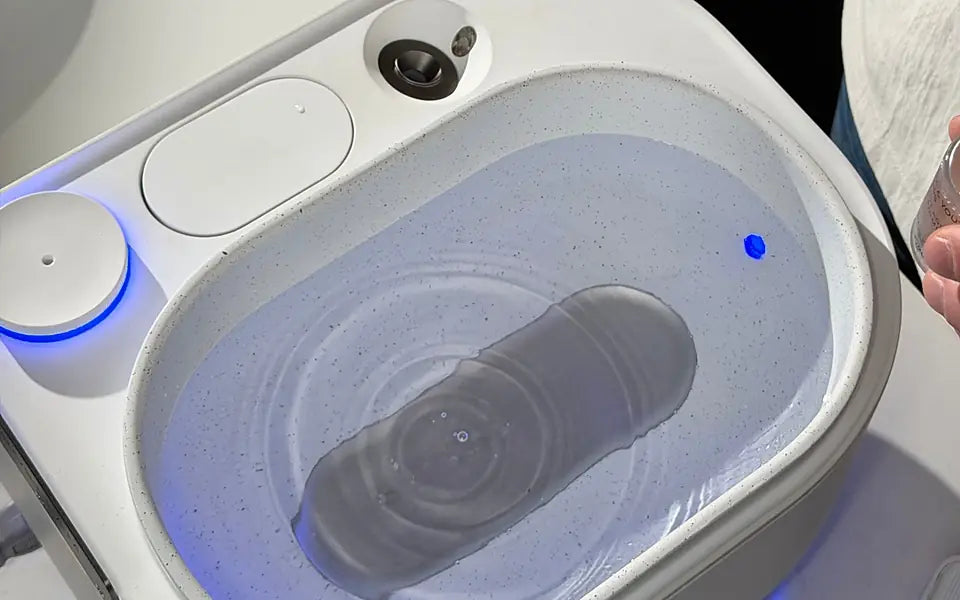
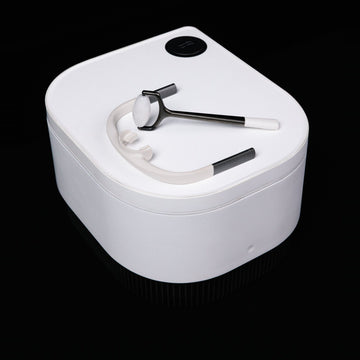
Harmony is not a pore treatment, and we would not present it as one. Where it fits is step six: the warm-then-cool ritual that makes the routine something you look forward to. Frosteam Harmony combines nano-ionic steam, a facial cold plunge held between 1 and 4°C and a built-in waterless aroma diffuser in one device on your counter. Get Yours Now.
For where each step sits in your day, see skincare routine order: what goes first. And to find the ritual that suits your skin, take our free AI Skin Analysis.
Sources
- American Academy of Dermatology Association. What can treat large facial pores?
- American Academy of Dermatology Association. How to treat different types of acne.
- Eichenfield DZ, Sprague J, Eichenfield LF. Management of acne vulgaris: a review. JAMA. 2021;326(20):2055-2067.
Watch the ritual
The contrast therapy facial ritual, step by step
The complete ritual in under a minute: nano-ionic steam, a facial cold plunge and aromatherapy, step by step.



Leave a comment
This site is protected by hCaptcha and the hCaptcha Privacy Policy and Terms of Service apply.