
Ice or Steam for Your Face? Science Says You Need Both And Here's Why
The debate has been going on for years. Team ice argues that cold shrinks pores, reduces puffiness, and leaves skin looking tighter and more awake. Team steam fires back that heat opens the skin, increases blood flow, and makes every product you apply afterward work harder. Both sides are right. But here's what neither side is talking about: ice or steam for your face isn't a question of choosing one. It's a question of sequencing. And the order matters more than most people realize.
What Steam Actually Does to Your Skin
When heat is applied to the face, blood vessels dilate in a process called vasodilation. This increases circulation to the surface of the skin, bringing oxygen and nutrients closer to where they're needed. The result is visible: skin looks more awake, more even, and genuinely more vibrant not because of a product, but because of a physiological response to warmth (Healthline, 2023).
Beyond circulation, steam does something even more valuable: it opens the skin's surface and increases permeability. The stratum corneum the outermost layer of skin acts as a barrier. Under normal conditions, it limits how much of what you apply actually penetrates. Under heat, that barrier temporarily relaxes, creating a window of significantly increased absorption. This is why professionals apply serums and actives immediately after facial steam, not before. The timing isn't incidental it's the entire point.
Nano-ionic steam takes this further. Unlike regular steam, nano-ionic particles are small enough to reach below the surface layer of the skin, delivering hydration at a cellular level rather than just on top of it. The difference in how skin feels afterward plumper, more supple, genuinely hydrated reflects exactly that depth of penetration (Rawlings & Harding, 2004).
What Cold Therapy Does to Your Skin
Cold exposure triggers the opposite physiological response: vasoconstriction. Blood vessels tighten, fluid is pushed back through the lymphatic system, and puffiness whether from sleep, stress, or fluid retention visibly reduces within minutes (Mooventhan & Nivethitha, 2014).
This is the mechanism behind the face ice bath trend that took over social media in 2026. The results are real. Cold exposure constricts blood vessels, reduces inflammation, and triggers something even more interesting: a boost in collagen production over time, which contributes to firmer, more toned skin with consistent use (Pournot et al., 2011).
There's also a nervous system dimension that rarely gets discussed in skincare contexts. Cold exposure to the face activates the mammalian dive reflex a hardwired physiological response that slows the heart rate and shifts the body into a parasympathetic state. In plain terms: cold therapy doesn't just change how your skin looks. It changes how you feel. Calmer, clearer, more grounded (Goedeke et al., 2021).
Why the Order Changes Everything
Here's where most people and most skincare routines get it wrong. Cold and steam both work. But applied in isolation, each one delivers only half of what it's capable of. Applied in sequence, they create something entirely different.
Steam first opens the skin, increases permeability, and creates the conditions for maximum product absorption. Cold second seals everything in, locks the hydration delivered by steam into the deeper layers, reduces any inflammation triggered by heat, and tones the surface. This is contrast therapy the deliberate alternation between heat and cold and it's been used in physiotherapy, sports recovery, and Scandinavian bathing culture for decades. Applied to the face, the mechanism is identical (Bieuzen et al., 2013).
The key insight: steam without cold leaves the skin open and slightly reactive. Cold without steam gives you the visual tightening but skips the absorption window entirely. Together, in the right order, they complete a physiological cycle that neither can achieve alone.
The Puffiness Problem and Why Cold Therapy Solves It
Facial puffiness is one of the most common skin complaints, and it's rarely caused by just one thing. Lymphatic fluid retention, poor circulation, high sodium intake, disrupted sleep, hormonal fluctuation, and chronic stress all contribute to the swollen, dull appearance many people wake up with. Cold therapy addresses the physiological root of most of these causes directly.
By constricting blood vessels and stimulating lymphatic drainage, cold exposure helps the face clear the excess fluid that accumulates overnight or during periods of stress. The effect is immediate visible within minutes which is exactly why the face ice bath trend spread so quickly. People could see it working in real time.
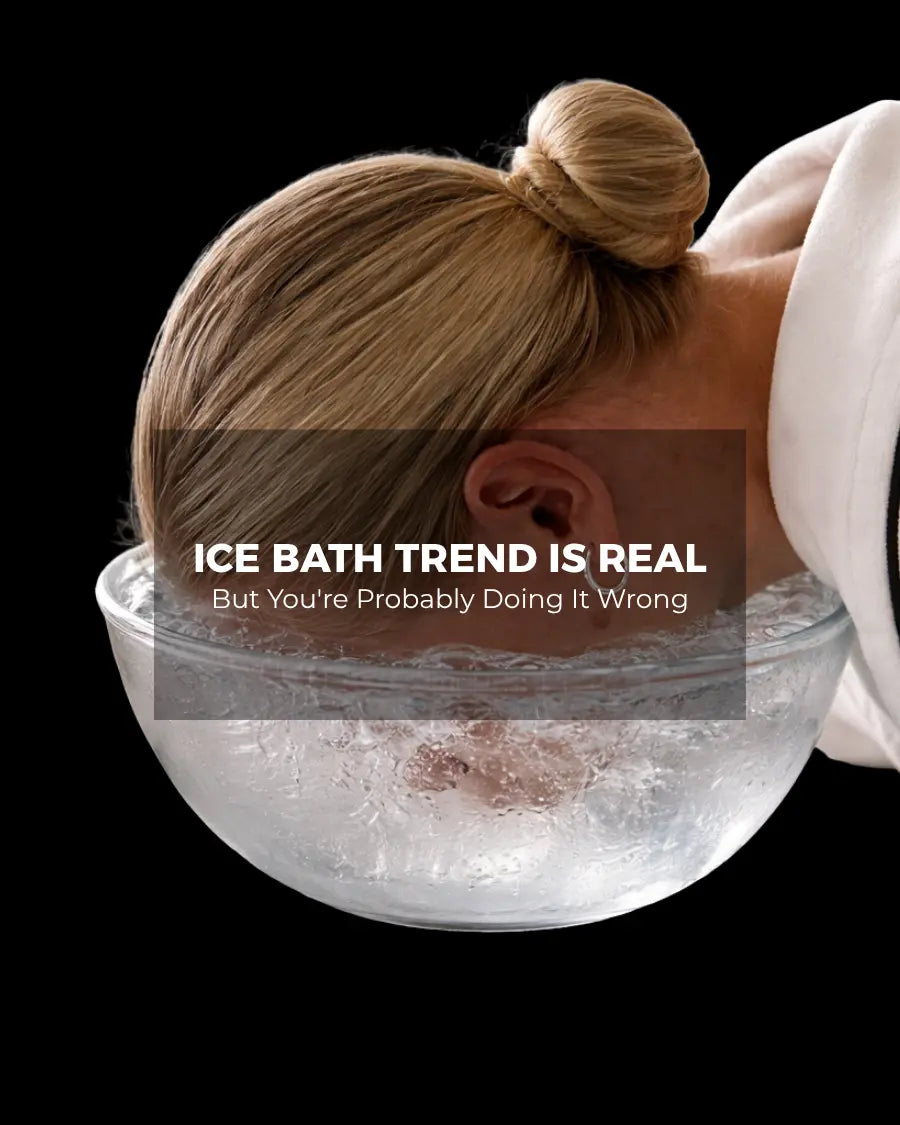
The limitation of the DIY version ice cubes in a bowl is control. Uneven temperature distribution, risk of capillary damage with repeated use, and the absence of any prep phase mean the results, while real, are shallow. Precision cold therapy at 1–4°C delivers the same vasoconstriction response without the risks, and in combination with a steam prep phase, the results go significantly deeper.
What Happens When You Combine Both
The complete contrast ritual steam, then cold produces a set of results that neither therapy achieves independently. Skin that has been steamed first is hydrated at the cellular level and maximally receptive. Cold applied afterward seals that hydration in, tones the surface, and reduces any residual inflammation. The skin that emerges from this cycle is genuinely different: more even, more luminous, and more stable in how it responds to products and environment over time.
The additional layer that's often overlooked is the nervous system effect. Aromatherapy during the steam phase specifically lavender and other calming essential oils has been shown to activate the parasympathetic nervous system, lowering cortisol before the cold phase even begins (Koulivand et al., 2013). Skin that is treated in a regulated nervous system state responds differently than skin treated under stress. Less reactivity, better absorption, more consistent results.
This is the full picture of what skin experts have been pointing toward for years not ice or steam, but the intelligent combination of both, in sequence, with the nervous system included in the equation. To understand more about how stress directly affects skin quality at the barrier level, read How Stress Impacts Your Skin (and What to Do About It).
Building the Ritual at Home
The challenge with contrast therapy has always been execution. A steamer in one location, a bowl of ice water in another, essential oils somewhere in the middle by the time the setup is done, the absorption window from steam has already closed. The ritual becomes a production, and productions don't last.
The most effective version of contrast therapy is the one you actually do every day. That means the sequence needs to be seamless: steam transitions directly into cold, with aromatherapy running throughout, and the whole ritual completed in under ten minutes before the rest of your routine.
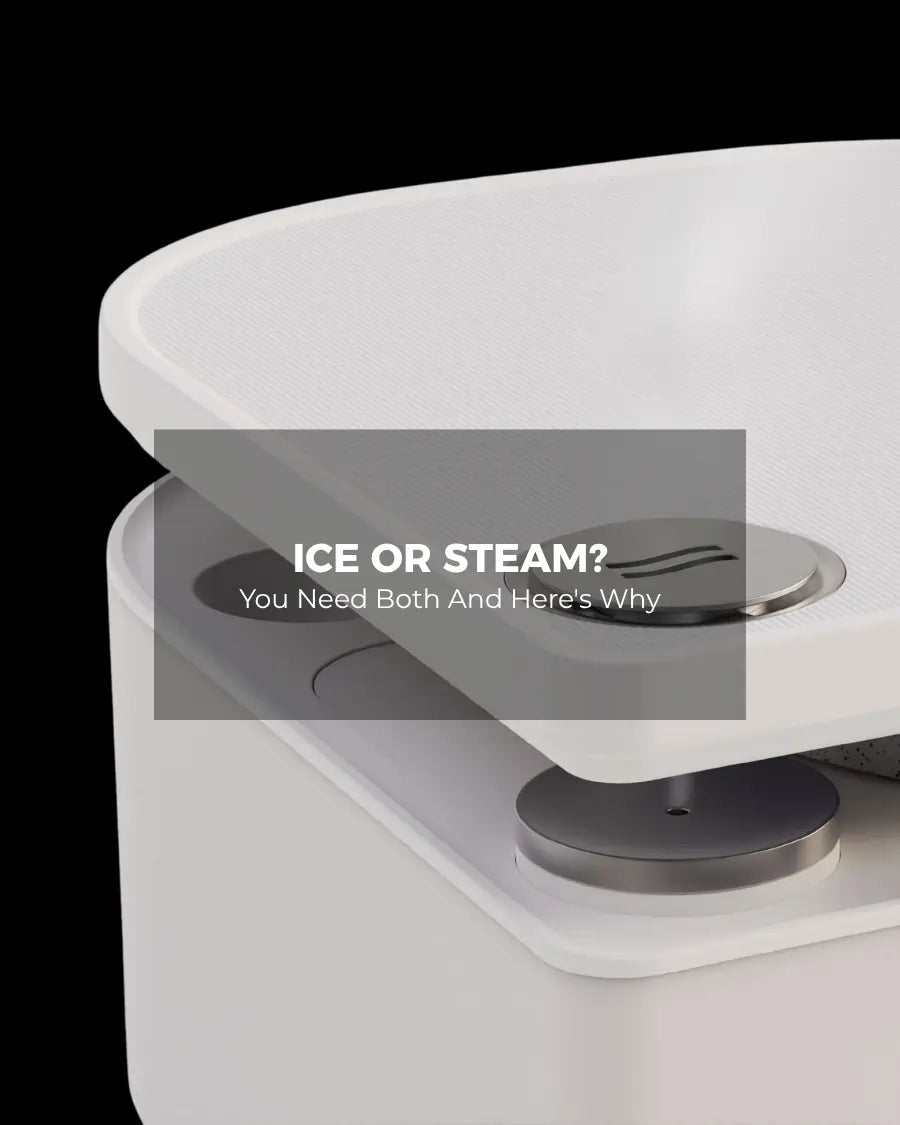
Frosteam was built around exactly this insight. As the world's first 3-in-1 facial device combining nano-ionic hot steam, precision cold therapy (1–4°C), and integrated aromatherapy, it delivers the complete contrast ritual in a single device no setup, no guesswork, no timing errors. Steam opens. Cold seals. Aromatherapy grounds. Your skin gets the full cycle, every morning, consistently.
For a deeper look at how the face ice bath trend fits into a complete contrast ritual and why cold alone misses the most important step read The Face Ice Bath Trend Is Real But You're Probably Doing It Wrong.
Ready to stop choosing between ice and steam and start doing both?
Discover Frosteam the complete contrast ritual in one device.
The Bottom Line
Science doesn't take sides in the ice vs. steam debate because the answer was never either/or. Cold therapy and facial steam serve genuinely different physiological purposes, and they work best not as alternatives but as partners. Steam creates conditions. Cold locks them in. Together, they form a ritual that is greater than the sum of its parts.
The skin you want luminous, calm, consistently hydrated, visibly depuffed isn't the result of the right product. It's the result of the right conditions, created every day, in the right sequence. That's what contrast therapy delivers. And that's what Frosteam was built to make possible.
Your skin doesn't need more products. It needs better conditions.
Try Frosteam and experience the complete ice and steam ritual built into one device.
References
-
Bieuzen, F., Bleakley, C. M., & Costello, J. T. (2013). Contrast water therapy and exercise induced muscle damage: A systematic review and meta-analysis. PLOS ONE, 8(4), e62356. https://doi.org/10.1371/journal.pone.0062356
-
Goedeke, S., Gordon, S., & Moreau, D. (2021). Breath and cold water immersion: Physiological and psychological effects. Frontiers in Physiology, 12, 701752. https://doi.org/10.3389/fphys.2021.701752
-
Koulivand, P. H., Khaleghi Ghadiri, M., & Gorji, A. (2013). Lavender and the nervous system. Evidence-Based Complementary and Alternative Medicine, 2013, 681304. https://doi.org/10.1155/2013/681304
-
Mooventhan, A., & Nivethitha, L. (2014). Scientific evidence-based effects of hydrotherapy on various systems of the body. North American Journal of Medical Sciences, 6(5), 199–209. https://doi.org/10.4103/1947-2714.132935
-
Pournot, H., Bieuzen, F., Louis, J., Fillard, J. R., Barbiche, E., & Hausswirth, C. (2011). Time-course of changes in inflammatory response after whole-body cryotherapy multi exposures following severe exercise. PLOS ONE, 6(7), e22748. https://doi.org/10.1371/journal.pone.0022748
-
Rawlings, A. V., & Harding, C. R. (2004). Moisturization and skin barrier function. Dermatologic Therapy, 17(S1), 43–48. https://doi.org/10.1111/j.1396-0249.2004.00514
Keep exploring cold therapy: the Frosteam cold therapy device collection · The Mammalian Dive Reflex · Cold Therapy for Skin


Leave a comment
This site is protected by hCaptcha and the hCaptcha Privacy Policy and Terms of Service apply.