


Terapia de contraste para el rostro: lo que el ciclo de calor y frío realmente hace por la piel
La terapia de contraste alterna calor y frío para darle a la piel un suave «entrenamiento vascular». Así es como esta técnica de spa actúa realmente en tu rostro, el orden correcto entre calor y frío, y cómo hacerla de forma segura en casa.
La terapia de contraste es la práctica de alternar calor y frío sobre la piel para favorecer el aspecto y la sensación de una buena circulación. Los atletas la usan desde hace décadas en baños de hielo y ciclos de sauna. En el rostro, el mismo principio aparece ahora como vapor cálido seguido de frío controlado, y se está convirtiendo rápidamente en uno de los rituales caseros de cuidado de la piel de los que más se habla.

¿Qué es la terapia de contraste?
La terapia de contraste, a veces llamada terapia de frío y calor, consiste en llevar la piel de temperaturas cálidas a frías en una secuencia deliberada, en lugar de elegir una u otra. El concepto viene de la recuperación deportiva, donde los atletas alternan la inmersión en agua caliente y fría para ayudar a que los músculos se sientan menos fatigados después de un entrenamiento intenso. La cultura nórdica del baño construyó todo un ritual en torno a la misma idea: sauna, luego una inmersión en agua fría, repetidas en ciclos.
El rostro es la nueva frontera de esta práctica. Las esteticistas llevan mucho tiempo usando faciales de «fuego y hielo» que combinan toallas calientes o vapor con un acabado frío. Lo que ha cambiado es el acceso. Un ritual que antes requería una cita en el spa ahora puede hacerse en el lavabo del baño en diez minutos.
¿Cómo actúa la terapia de contraste en la piel del rostro?
El mecanismo es sencillo. El calor hace que los vasos sanguíneos cercanos a la superficie de la piel se ensanchen, un proceso llamado vasodilatación. El frío hace lo contrario: hace que esos mismos vasos se estrechen, lo que se conoce como vasoconstricción. Alternar entre ambos crea lo que muchos describen como un «entrenamiento vascular», un suave vaivén que la piel no experimenta con una sola temperatura estática.
En pocas palabras: el calor abre, el frío vuelve a tensar, y la transición entre ambos es donde la gente dice sentir el efecto más inmediato, tanto en la sensación como en el aspecto visible de su piel.
¿Cuáles son los beneficios de la terapia de contraste para el rostro?
Estos son los efectos que más se reportan y observan con un ritual facial de calor a frío. Como con cualquier rutina cosmética, los resultados varían según el tipo de piel y la constancia de uso.
- Poros de aspecto afinado. El calor permite que los poros se relajen y liberen con más facilidad las impurezas superficiales, mientras que el acabado frío ayuda a que la piel se vea visiblemente más firme y lisa inmediatamente después.
- Menos aspecto de hinchazón. La fase fría, en particular, favorece un aspecto desinflamado, sobre todo a primera hora de la mañana.
- Un aspecto más luminoso y despierto. Muchas personas notan una diferencia inmediata en la luminosidad justo después de una sesión, probablemente ligada al propio cambio de temperatura.
- Mejor absorción de los productos después del vapor. La piel cálida y suavizada suele aceptar los sérums y las cremas hidratantes con más facilidad que la piel seca y cerrada.
- Un ritual realmente relajante. Más allá de la piel, la experiencia sensorial, el calor que da paso a un acabado fresco, es uno de los rituales de dos minutos más calmantes de una rutina de cuidado de la piel.
¿Primero calor o frío? El orden correcto
La secuencia importa. Empieza con vapor cálido para suavizar la piel y aflojar el sebo y las impurezas superficiales, normalmente durante cinco a ocho minutos. Termina con frío controlado, alrededor de 1 a 4°C, durante uno a dos minutos. Terminar con frío es lo que produce el acabado visiblemente tensado y desinflamado que la mayoría busca. Terminar con calor deja la piel enrojecida y los poros más abiertos, justo lo contrario del efecto que quieren la mayoría de los seguidores de la terapia de contraste.
¿Cómo hacer terapia de contraste en casa?
Hay tres opciones habituales, en orden de constancia y control.
Versión casera con una toalla caliente y un bol de hielo. Es el punto de partida más accesible: una toalla caliente y húmeda presionada sobre el rostro durante varios minutos, seguida de un bol de agua con hielo para un chapuzón frío o una breve inmersión. Funciona, pero la temperatura del agua cambia rápido, y el hielo directo sobre la piel puede actuar de forma desigual y, para algunas personas, resultar incómodo.
Un facial de fuego y hielo en el spa. Las esteticistas ofrecen esta combinación desde hace años, normalmente como paso final añadido a un tratamiento facial completo.
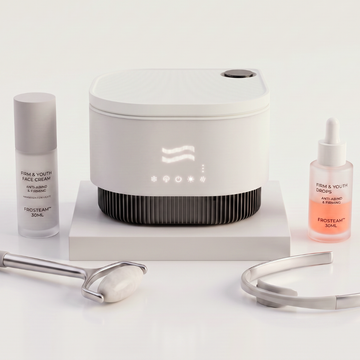
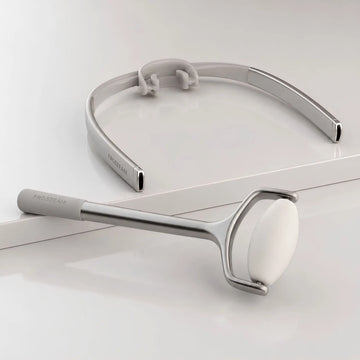
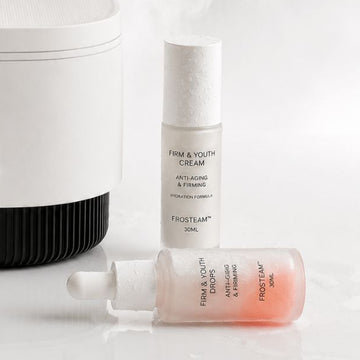
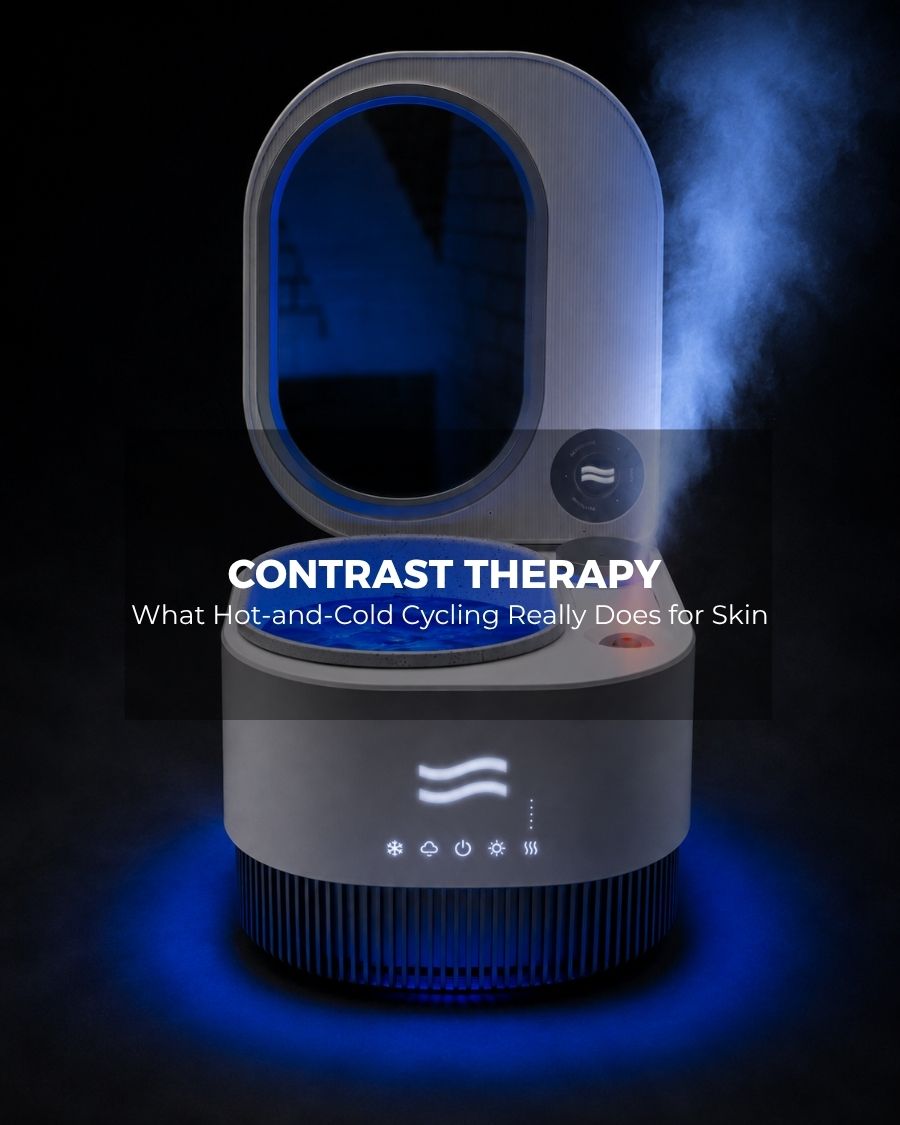
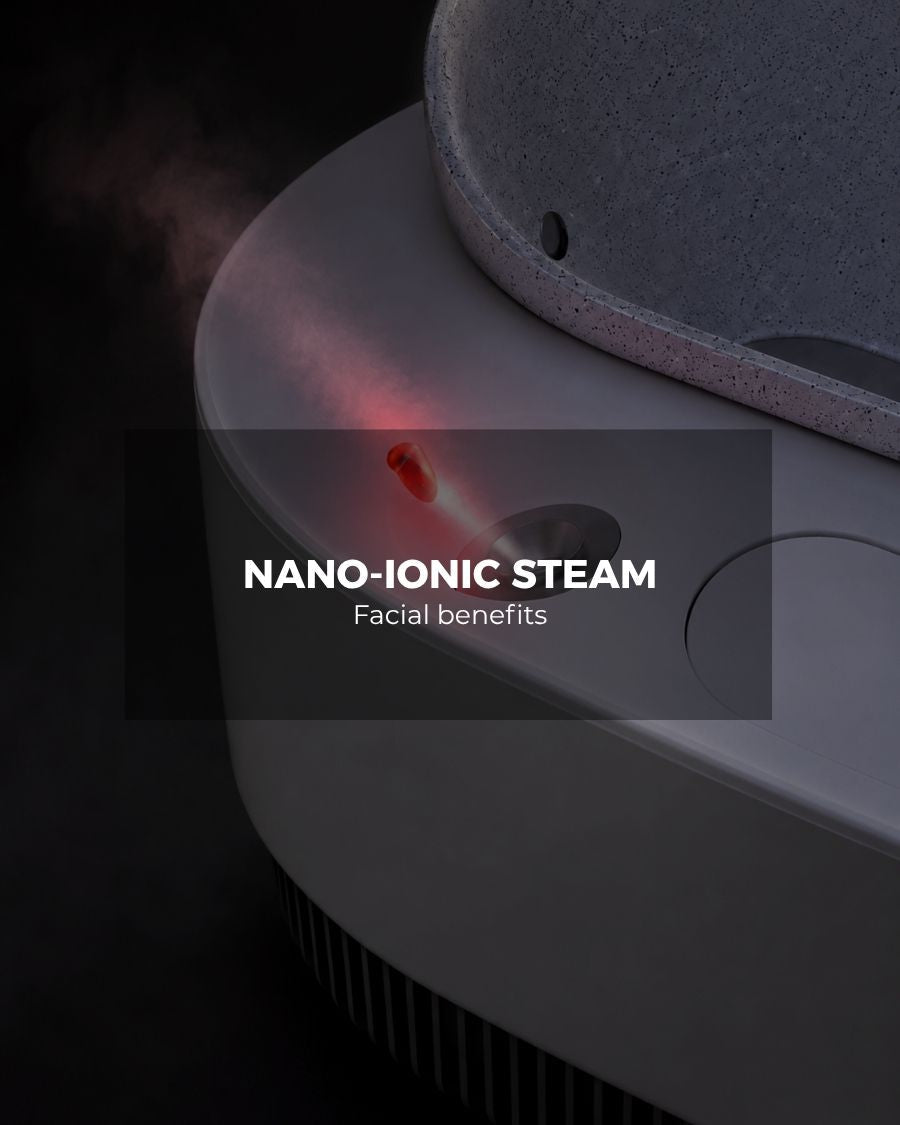
Un dispositivo dedicado. Aquí es donde un dispositivo 3 en 1 que automatiza el ciclo de calor y frío cambia la experiencia. En lugar de gestionar una tetera de agua caliente y un bol de hielo que se derrite, Harmony automatiza el ciclo: el vapor nano-iónico (descubre cómo funciona) para la fase cálida, seguido de un recipiente de agua helada controlado entre 1 y 4 °C mediante el sistema Thermo-Cooling de Frosteam para el acabado frío, con una cámara de aromaterapia opcional. La temperatura se mantiene constante durante toda la sesión, que es lo más difícil de replicar a mano. Harmony ya está disponible: consigue el tuyo ahora en preventa.
¿La terapia de contraste es adecuada para tu tipo de piel?
Para la mayoría de las personas, sí, con moderación. Conviene saber algunas cosas antes de empezar:
- La piel sensible o con tendencia a la rosácea debería empezar con una exposición al frío más corta y una fase de vapor tibio (no caliente), ya que los cambios bruscos de temperatura pueden provocar enrojecimiento en la piel reactiva.
- El frío controlado es mejor que el hielo directo. Una temperatura constante de 1 a 4°C es una experiencia más suave y predecible que un cubito de hielo que empieza en el punto de congelación y se calienta de forma desigual contra la piel.
- Constancia antes que intensidad. Las sesiones más cortas y frecuentes suelen sentirse mejor en la piel que un ciclo largo e intenso.
Si tienes una afección cutánea activa, estás embarazada o tienes un problema cardiovascular, consulta a un médico antes de empezar cualquier rutina de exposición al frío, facial o de otro tipo.

Dejar un comentario
Este sitio está protegido por hCaptcha y se aplican la Política de privacidad de hCaptcha y los Términos del servicio.