
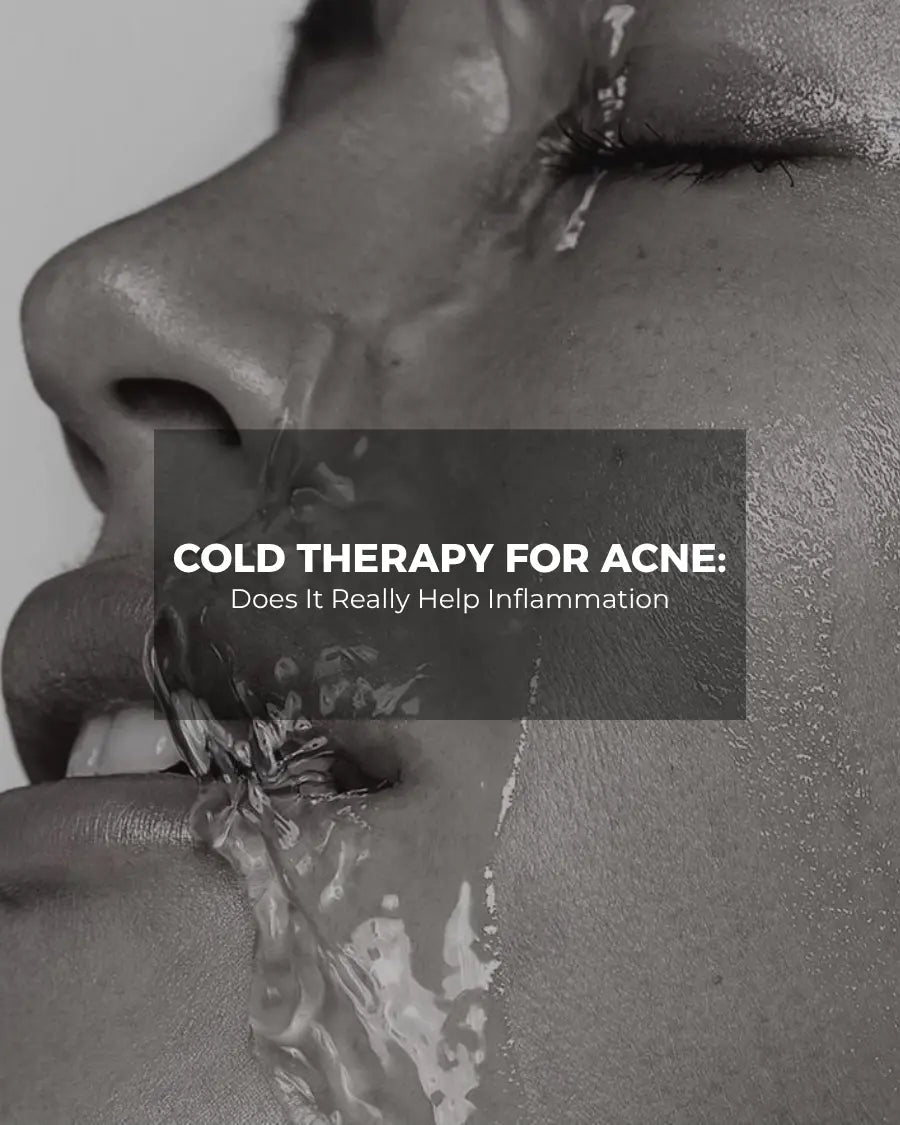
El auge de la crioterapia para el acné ha cambiado la forma en que muchas personas piensan sobre la piel inflamada. Desde baños de hielo faciales hasta inmersiones en frío y herramientas de belleza refrigeradas, más usuarios de productos para el cuidado de la piel están recurriendo a la exposición al frío para calmar el enrojecimiento, reducir la hinchazón y hacer que los brotes luzcan menos intensos.
Al principio, la lógica parece simple. El acné a menudo se ve rojo, hinchado e irritado. Se sabe que el frío crea un efecto calmante en las áreas inflamadas. Por lo tanto, tiene sentido que las personas recurran al hielo, al agua fría o a una inmersión facial fría cuando aparece un brote repentino.
Las herramientas importan aquí: descubre nuestros rodillos de hielo y herramientas de masaje facial para una aplicación de frío suave y constante.
Pero si bien la idea es popular, la realidad es más matizada. La crioterapia puede ayudar con los síntomas visibles del acné, especialmente la inflamación y la hinchazón, pero no trata directamente las causas raíz de los brotes. Esa distinción es importante, especialmente en un panorama de belleza donde los consejos virales sobre el cuidado de la piel a menudo convierten los rituales de apoyo en afirmaciones milagrosas.
La mejor pregunta no es solo si la crioterapia funciona. Es cómo funciona la crioterapia, qué puede hacer de manera realista por la piel propensa al acné y por qué un enfoque más controlado puede ser mejor que los métodos agresivos de bricolaje.

¿Qué es la crioterapia para el acné?
La crioterapia para el acné se refiere al uso de temperaturas frías en la cara para calmar los signos visibles de los brotes inflamados. Esto puede incluir baños de hielo, globos fríos, rodillos fríos, compresas frías o sistemas de cuidado de la piel más avanzados diseñados para proporcionar un efecto refrescante de forma más controlada.
El razonamiento detrás de esto proviene de una respuesta fisiológica básica. La exposición al frío se asocia con la vasoconstricción, lo que significa que los vasos sanguíneos se estrechan en respuesta a temperaturas más bajas. Esto puede reducir temporalmente la apariencia visible de la hinchazón y el enrojecimiento. Las revisiones de crioterapia y terapia de frío en contextos de rehabilitación y recuperación ayudan a explicar por qué el enfriamiento se usa a menudo para controlar la inflamación y la respuesta de los tejidos. Detallamos los beneficios del hielo facial en nuestra guía dedicada.
En el cuidado de la piel, esto es especialmente relevante porque el acné no se trata solo de poros obstruidos. Muchos brotes, especialmente las lesiones inflamatorias y quísticas, también se asocian con enrojecimiento, sensibilidad e hinchazón local. Esto es lo que hace que la crioterapia sea tan atractiva. Puede que no elimine el brote en sí, pero puede cambiar la forma en que ese brote se ve y se siente a corto plazo.
Por qué la gente usa la crioterapia para el acné
La popularidad de la crioterapia para el acné proviene del hecho de que parece ofrecer un alivio visible inmediato. En cuestión de minutos, la piel puede verse más tranquila, menos hinchada y ligeramente más uniforme. Para alguien que lidia con un brote doloroso antes del trabajo, un evento o la filmación de contenido, ese tipo de mejora a corto plazo puede resultar significativa.
Los consumidores también se sienten atraídos por la crioterapia porque les parece simple y accesible. No requiere receta médica. No se siente áspera de la misma manera que los exfoliantes fuertes o los tratamientos localizados secantes. Y encaja en la conversación más amplia sobre el bienestar, donde los rituales térmicos se están convirtiendo en parte de la forma en que la gente piensa sobre la belleza, el biohacking y el autocuidado.
Aun así, la popularidad no debe confundirse con la precisión. Una tendencia puede señalar una necesidad real sin dejar de depender de un método que no está completamente optimizado.
Cómo la crioterapia puede ayudar al acné inflamado
1. Puede reducir temporalmente la hinchazón
Una de las principales razones por las que las personas usan la crioterapia para el acné es para hacer que los brotes inflamados parezcan menos elevados. El enfriamiento se asocia a menudo con una reducción de la hinchazón localizada, que es una de las razones por las que la crioterapia y la aplicación de frío se utilizan de forma más generalizada en entornos de recuperación. Revisión sobre la inmersión en agua fría y la crioterapia.
2. Puede calmar el enrojecimiento
El enrojecimiento es uno de los aspectos visuales más frustrantes del acné. Debido a que el frío reduce temporalmente el flujo sanguíneo visible en la zona, puede hacer que las imperfecciones parezcan más calmadas durante un corto período de tiempo. Esto puede ser especialmente útil cuando los brotes están irritados, hinchados o recién inflamados.
3. Puede ser relajante
Algunos brotes inflamados se sienten sensibles o incómodos. Enfriar la piel puede crear una sensación calmante que hace que el brote se sienta menos reactivo. Esta es parte de la razón por la que la gente a menudo describe la crioterapia como un paso calmante.
4. Contribuye a un aspecto general más fresco
Incluso si la crioterapia no aborda la causa raíz del acné, aún puede mejorar la apariencia general del rostro al reducir la hinchazón y hacer que la piel luzca más despierta. Este efecto visual más amplio contribuye a la popularidad de los rituales fríos relacionados con el acné.

Lo que no hace la crioterapia para el acné
Aquí es donde la conversación se vuelve importante. La crioterapia para el acné puede mejorar la apariencia y el confort, pero no debe presentarse como un tratamiento completo para el acné.
La crioterapia no:
- desobstruye los poros
- regula la producción de grasa
- mata las bacterias que causan el acné
- reemplaza los ingredientes específicos para el acné
- resuelve los desencadenantes internos de los brotes hormonales
En otras palabras, el frío puede ayudar con los síntomas del acné inflamado, especialmente la hinchazón y el enrojecimiento, pero no resuelve directamente todo el proceso del acné. Esta distinción es importante porque muchos usuarios esperan que la calma a corto plazo se traduzca en una limpieza a largo plazo, y ahí es donde a menudo se produce la decepción.
¿Es bueno el hielo para la piel propensa al acné?
Esta es una de las preguntas más buscadas sobre la belleza fría. La respuesta es matizada. El hielo en sí mismo no es automáticamente malo, pero el frío directo, extremo e incontrolado puede ser demasiado agresivo para algunas personas, especialmente si la piel ya está inflamada o comprometida.
La piel propensa al acné a menudo es más sensible de lo que la gente supone. Es posible que ya esté lidiando con irritación por ingredientes activos, limpieza excesiva, exfoliación o interrupción de la barrera. Agregar exposición directa al hielo a ese ambiente puede ser demasiado para ciertos tipos de piel.
La Academia Estadounidense de Dermatología ha advertido que el frío extremo puede dañar la piel en entornos de crioterapia. Un baño de hielo facial no es lo mismo que la crioterapia médica, pero el principio más amplio sigue siendo importante. Las temperaturas extremas no siempre son ideales para la delicada piel del rostro.
Los problemas de los métodos de hielo caseros para el acné
1. Demasiada intensidad, demasiado poco control
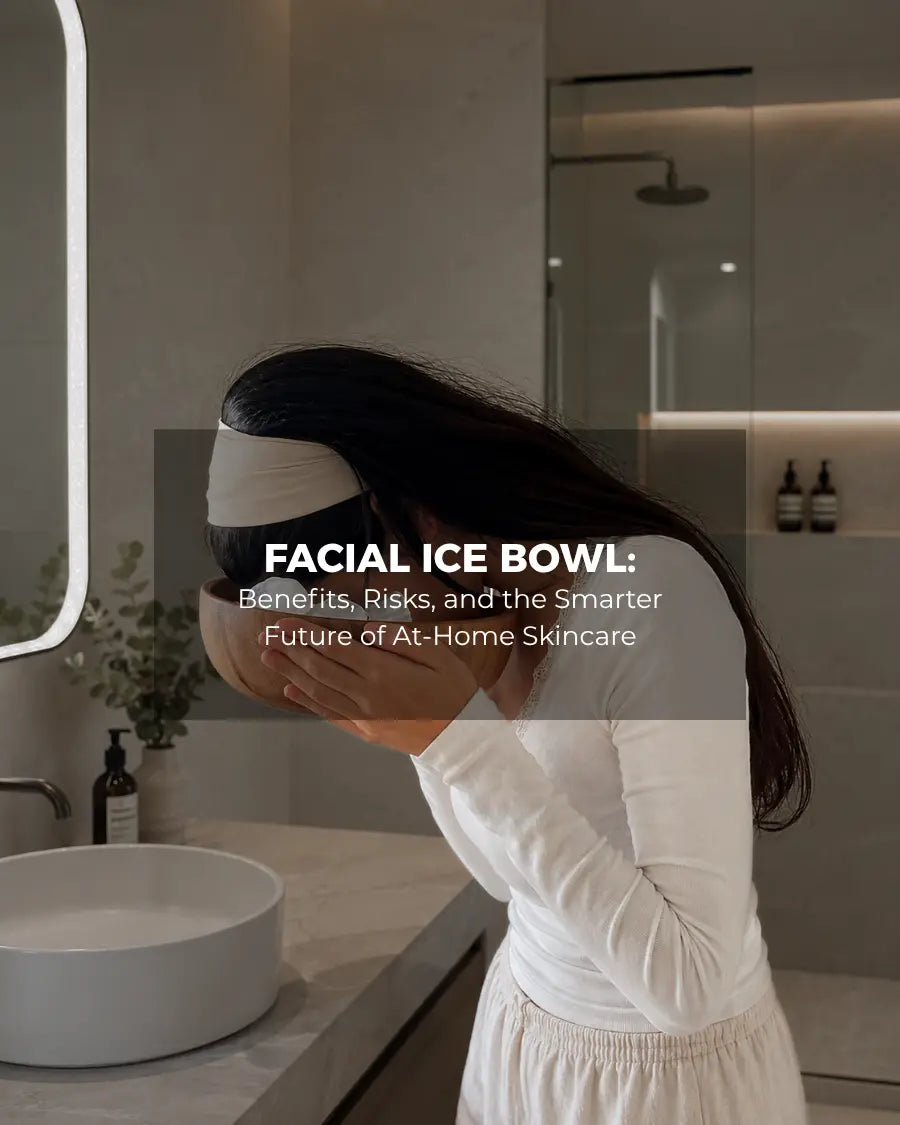
Un tazón de agua con hielo puede parecer simple, pero ofrece muy poco control sobre la temperatura o la exposición. Un día puede sentirse tolerable, al día siguiente puede ser mucho más frío. Esa inconsistencia es importante porque la piel responde mejor a rutinas repetibles e intencionales.
2. La piel inflamada no siempre necesita un choque
La gente a menudo asume que una sensación más fuerte significa resultados más fuertes. Pero la piel propensa al acné generalmente se beneficia más del equilibrio que de los extremos. Un brote que ya está inflamado puede no necesitar un choque térmico agresivo. Puede que simplemente necesite un estímulo controlado y calmante.
3. La higiene es importante
Los tazones, el agua del grifo, el hielo que se derrite, la manipulación repetida y la configuración del baño o la cocina crean un proceso que no es especialmente elegante ni controlado. Para la piel que ya está comprometida por la inflamación, la limpieza es importante.
4. Es difícil de mantener
Los mejores rituales de cuidado de la piel son los que la gente puede repetir consistentemente. Los baños de hielo son desordenados, inconvenientes e incómodos para muchos usuarios. Eso los hace más difíciles de mantener como parte de una rutina real.
Por qué el frío controlado tiene más sentido que el frío extremo
El verdadero valor de la crioterapia para el acné no se trata de lo extrema que pueda ser la temperatura. Se trata de proporcionar un beneficio refrescante de una manera que sea repetible, respetuosa con la piel y compatible con una rutina moderna.
El frío controlado tiene más sentido porque puede:
- proporcionar un efecto calmante sin un choque innecesario
- sentirse más suave en la piel sensibilizada
- encajar más fácilmente en el uso regular
- ofrecer una experiencia de cuidado de la piel más pulcra
En el cuidado de la piel, los rituales más efectivos a largo plazo rara vez son los más dramáticos. Son aquellos en los que la gente puede confiar y repetir.
La pieza que falta: por qué el frío por sí solo no es toda la historia
Otra razón por la que muchos usuarios se sienten decepcionados con la crioterapia básica es que el frío por sí solo puede ser demasiado unidimensional. Ayuda a calmar y contraer, pero el cuidado de la piel moderno se está moviendo cada vez más hacia sistemas sensoriales más completos que consideran tanto la estimulación como la relajación.
En la ciencia térmica y la literatura sobre recuperación, la terapia de contraste ha recibido atención porque el calor y el frío afectan el flujo sanguíneo de manera diferente. El frío se asocia con la vasoconstricción, mientras que el calor se asocia con la vasodilatación. Las revisiones sobre baños de contraste e intervenciones térmicas exploran cómo estas respuestas pueden influir en la circulación y la recuperación de los tejidos.
- Revisión sistemática sobre baños de contraste
- Mecanismos y eficacia de la terapia de contraste
- Revisión de crioterapia y termoterapia
En términos de belleza, esto es importante porque los consumidores ya no buscan solo un efecto de "despertar" brusco. Quieren rutinas que se sientan completas, de primera calidad y alineadas con la idea más amplia del bienestar de la piel.

Cómo Frosteam replantea la crioterapia para la piel propensa al acné
Frosteam encaja directamente en este cambio. En lugar de basarse en la antigua lógica de la exposición extrema al hielo casera, reinventa el cuidado térmico facial de la piel como un ritual más elevado.
Frosteam combina:
- vapor caliente nano-iónico
- terapia facial fría controlada
- aromaterapia
en un solo sistema diseñado para sentirse más intencional y completo.
Si prefieres un enfoque más suave, descubre el hielo facial para el acné, un enfoque natural con aromaterapia.
Esto es importante para la piel propensa al acné porque el futuro del cuidado de la piel no se trata de forzar el rostro a extremos dramáticos. Se trata de crear rituales que favorezcan la comodidad de la piel, la consistencia de la rutina y una experiencia general más refinada.
En lugar de pedir a los usuarios que elijan entre una tendencia y una rutina pulida, Frosteam posiciona la crioterapia facial dentro de un ritual de cuidado de la piel más amplio basado en el bienestar. Esa es una evolución significativa de la era de los baños de hielo faciales.
¿Quiénes podrían beneficiarse más de la crioterapia para el acné?
La crioterapia puede ser especialmente atractiva para las personas que padecen:
- brotes inflamados ocasionales
- imperfecciones hormonales que se hinchan visiblemente
- enrojecimiento alrededor de las lesiones activas
- hinchazón matutina combinada con piel propensa al acné
- piel que necesita calma en el momento, no una estimulación agresiva
Dicho esto, las personas con piel muy sensible, reactiva o con barrera cutánea alterada deben ser cautelosas con cualquier cosa extrema. La piel con acné no es automáticamente resistente solo porque produce grasa. En muchos casos, en realidad es más vulnerable de lo que parece.
Lo que los consumidores realmente quieren de la crioterapia para el acné
Cuando la gente busca la crioterapia para el acné, a menudo busca algo más que un truco de temperatura. Buscan:
- una forma de calmar los brotes de aspecto irritado
- una vía más rápida para una piel visiblemente calmada
- un ritual que se sienta mejor que los tratamientos localizados agresivos
- una solución moderna para el cuidado de la piel que combine resultados con experiencia
Esto es lo que hace que la categoría sea tan interesante. La demanda no es solo de apoyo para el acné. Es de una mejor experiencia emocional y sensorial en el cuidado del acné. Ahí es donde la diferenciación de la marca se vuelve poderosa.

Conclusión: La crioterapia para el acné puede ayudar, pero el método importa
La crioterapia para el acné no es un mito. Puede ayudar a calmar los signos visibles de los brotes inflamados, especialmente el enrojecimiento, la hinchazón y la incomodidad temporal. Por eso la tendencia resuena. Responde a una necesidad real.
Pero no es un tratamiento completo para el acné, y no todos los métodos de frío son igualmente inteligentes. El futuro de esta categoría no se trata de una exposición al hielo más fuerte o de rutinas de bricolaje más dramáticas. Se trata de rituales más controlados, más elevados y más sostenibles.
Ahí es donde Frosteam cambia la conversación. Transforma el cuidado facial frío de la piel de un truco reactivo a una experiencia en casa más refinada, diseñada para las rutinas de belleza modernas.
No solo más frío. Más inteligente.

Dejar un comentario
Este sitio está protegido por hCaptcha y se aplican la Política de privacidad de hCaptcha y los Términos del servicio.