


Does Cold Therapy Boost Collagen? What the Science Actually Shows
Cold therapy has long been praised for its anti-inflammatory and skin-firming effects. Today, science confirms its role in stimulating collagen production—making it a must in modern skincare rituals like Frosteam.

Cold therapy has been scientifically shown to stimulate collagen production — the vital protein responsible for keeping skin firm, elastic, and youthful. When the skin is exposed to controlled cooling, it triggers microcirculation and cellular repair, encouraging new collagen synthesis. Frosteam™ combines precise cold exposure with nano-ionic steam to enhance this natural response, tightening and rejuvenating the skin for visibly smoother, lifted results — all backed by science.
The Science of Cold Therapy and Collagen Stimulation
Cold therapy—also known as cryotherapy—has been shown to boost microcirculation, reduce inflammation, and stimulate fibroblasts (the skin cells responsible for collagen and elastin production).
Exposure to cold triggers vasoconstriction followed by reactive vasodilation, increasing blood flow and oxygenation — both of which support the conditions collagen-producing cells need to function well.
How Frosteam Integrates Cold Therapy
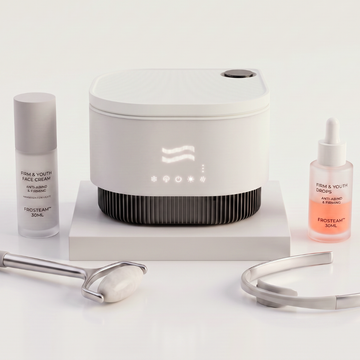
Frosteam combines modern skincare science with user-friendly technology. Its built-in Frosteam Thermo-Cooling System cools the water in the basin to a controlled 1–4 °C (34–39 °F) for a facial cold plunge after steam treatment.
This is more than just a cooling sensation—it creates the ideal thermal contrast (heat followed by cold) to:
-
Stimulate collagen production
-
Firm and tone the skin
-
Reduce redness and inflammation
-
Tighten pores without irritation
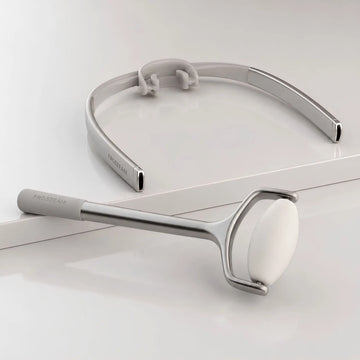
Unlike traditional tools like ice rollers or frozen spoons, the Frosteam basin holds its water at a stable, controlled temperature of 1–4 °C throughout the session.
You can learn more about the device on the Frosteam product page.
A Spa-Like Ritual, Rooted in Evidence
Cold therapy has been used for decades in physical medicine and recovery. Its transition into skincare isn’t just a trend—it’s a clinical evolution. Devices like Frosteam now make these benefits accessible at home, with precision and comfort.
Regular use of cold therapy, especially when paired with nano-steam beforehand, offers long-term improvements in skin tone, texture, and firmness.
Conclusion: The Future of Skin Firming Is Cold
Collagen stimulation doesn’t have to rely on injections or invasive procedures. With Frosteam, you can support natural collagen production using safe, dermatologist-backed methods from the comfort of your home.
Order Frosteam today and turn your skincare ritual into a science-backed solution for firmer, smoother skin.
What Actually Stimulates Collagen (and Where Cold Fits In)
The interventions most consistently shown to stimulate collagen in dermatology research are topical retinoids, daily broad-spectrum sunscreen, and adequate nutrition — while cold therapy plays a supporting role by improving circulation and calming inflammation. Understanding this hierarchy helps you build a routine where each element does the job it is genuinely suited for.
Retinoids (vitamin A derivatives such as retinol and prescription tretinoin) remain the most studied topical ingredients for encouraging the skin's own collagen renewal. Daily SPF works from the other direction: ultraviolet exposure activates enzymes that break down existing collagen, so consistent sun protection preserves what your skin has already built. Nutrition matters too — collagen synthesis depends on adequate protein and vitamin C, which acts as a required cofactor in the process.
Where does cold fit in? Controlled cooling supports the conditions in which healthy skin functions best. The brief vasoconstriction and rebound circulation it triggers help deliver oxygen and nutrients to the skin, and its calming effect on inflammation matters because chronic, low-grade irritation is associated with faster breakdown of collagen and elastin. In other words, cold therapy is best understood as a complement to proven collagen stimulators, not a replacement for them — a perspective explored further in our article on the shift from anti-aging to skin longevity and in why skin regulation is the new anti-aging.
How to Add Cold Therapy to a Collagen-Friendly Routine
The simplest way to add cold therapy to a collagen-friendly routine is to use it consistently a few times per week, after cleansing and warm steam and before applying your serums and moisturizer. A practical sequence looks like this:
- Cleanse to remove makeup, sunscreen, and surface buildup.
- Warm steam for a few minutes to soften the skin surface and open the session comfortably.
- Take a facial cold plunge in the chilled basin, following the immersion times in the user manual.
- Follow with your actives — vitamin C in the morning, a retinoid in the evening if your skin tolerates it — then moisturizer.
- Finish with broad-spectrum SPF every morning, regardless of the season.
Consistency matters more than intensity: a calm, repeatable ritual done several times a week supports your skin far better than occasional extremes. If you want a structured way to practice this sequence, the Frosteam Harmony Recovery Bundle is built around exactly this warm-then-cold order of steps.
FAQ
Does cold therapy build collagen on its own?
No — current dermatology consensus does not support cold as a direct collagen builder. Cold therapy supports skin firmness indirectly, by improving microcirculation and reducing inflammation, which helps protect existing collagen and creates favorable conditions for skin repair. For direct stimulation, retinoids, sunscreen, and good nutrition remain the foundations.
How often should I use facial cold therapy?
Two to four sessions per week is a sensible starting point for most skin types, with each cold phase lasting roughly two to five minutes. Keep each immersion short and come up between dips rather than holding one long immersion, and reduce frequency if you notice redness that lingers well after a session.
Can cold therapy replace retinoids or sunscreen?
No. Cold therapy complements these steps but cannot replace them. Retinoids actively encourage collagen renewal and sunscreen prevents ultraviolet-driven collagen breakdown — two roles cooling does not perform. Think of cold as the circulation-and-calming layer of a routine whose collagen foundations are retinoids, SPF, and nutrition.


Leave a comment
This site is protected by hCaptcha and the hCaptcha Privacy Policy and Terms of Service apply.